


Views: 0 Author: Site Editor Publish Time: 2026-06-04 Origin: Site


Multi-tenant buildings, solar PV retrofits, and high-density industrial panels often struggle. Inaccurate energy allocation causes major issues. Without precise measurements, property managers and facility engineers frequently face disputes. Subjective utility cost splitting frustrates users and owners alike. Granular, post-utility billing tracking offers a reliable, data-driven answer.
The standard solution for this challenge is a robust DIN rail KWh meter. These compact digital instruments integrate seamlessly into existing consumer boxes. They monitor exact power usage right at the circuit level. Hardware like this replaces guesswork with undeniable consumption data.
In this article, we break down exactly how to approach this hardware. You will learn to navigate key specifications and avoid common installation pitfalls. We also show you how to match the right module to your panel layout. Our goal is to provide a strictly technical, hype-free evaluation framework. This framework guides you in selecting, sizing, and installing a sub-meter effectively.
Accuracy Baseline: Commercial-grade digital sub-meters must meet IEC 62053-21 Class 1.0 (<±1% variance) to be viable for billing or precise solar monitoring.
Space Efficiency: Modern single-module units measure just 18mm in width, maximizing limited consumer box real estate on standard 35mm rails.
Installation Sensitivity: Even solid-state meters require strict environmental compliance; improper installation (e.g., >2° tilt, proximity to heat) can compromise measurement integrity.
Application Scope: Sub-meters track total circuit consumption, not individual device loads, requiring proper circuit isolation during the planning phase.
Utility company billing meters operate on a macro level. They measure the aggregate power drawing into an entire property. Sub-meters operate on a micro level. They capture granular data downstream from the primary grid connection. Deploying a sub-meter solves distinct business problems requiring pinpoint accuracy.
Landlord-Tenant Sub-Billing: Multi-unit properties use sub-meters to charge tenants accurately. It eliminates flat-rate billing models and encourages energy conservation.
Localized Solar PV Tracking: Solar arrays require strict generation monitoring. Sub-meters verify panel efficiency independent of the main utility readings.
Departmental Cost Allocation: Large commercial facilities separate power usage by department. This helps managers audit high-consumption zones effectively.
Matching the meter to your electrical infrastructure is essential. Most residential homes and standard commercial office circuits run on a single phase system. You deploy a single phase energy meter for these common applications. They handle everyday appliances, lighting, and standard wall outlets.
Industrial settings present a different requirement. Heavy machinery, industrial HVAC systems, and large motors demand more power. A three phase energy meter tracks these multi-line circuits. Attempting to measure a three-phase circuit using single-phase equipment causes dangerous miscalculations.
Buyers often misunderstand sub-meter capabilities. A sub-meter calculates aggregate consumption for the wired circuit only. It cannot algorithmically separate individual appliance loads sharing that same circuit. If you wire a refrigerator and a microwave on one line, the meter shows combined usage. You must isolate specific appliances onto dedicated breakers during your planning phase.
Digital metering hardware looks similar on the surface. However, internal components vary wildly in quality. Evaluating these units requires a strict look at form factor, measurement thresholds, and security features.
Panel space comes at a premium in modern switchgear cabinets. The global standard relies on a 35mm DIN rail mounting system. Modern digital models utilize highly compact single-module designs. A single module measures just 18mm in width. This slim profile allows facility managers to cram multiple meters into tight residential consumer units.
High precision separates commercial instruments from cheap gadgets. You should evaluate specific electrical thresholds before making a purchase.
Starting Current: Look for low starting currents around 20mA. This ensures the unit captures tiny parasitic loads from devices on standby.
Display Resolution: Verify the LCD resolution capabilities. Standard meters display increments of 0.1 kWh. High-precision units provide 0.01 kWh resolution for exact tracking.
Variance Class: IEC 62053-21 Class 1.0 certification guarantees your meter deviates by less than ±1%.
Grid outages happen unexpectedly. A power failure must never erase historical consumption data. Non-volatile memory is an absolute necessity for any sub-meter. The LCD screen turns off during a blackout. However, the internal chip permanently retains the exact kWh reading. It resumes tracking seamlessly upon power restoration.
Energy fraud presents a real risk in tenant sub-billing. Dishonest users might attempt to reverse the wiring to roll back the meter. Secure devices feature uni-directional measurement. This anti-reversal technology blocks reverse current flow from subtracting from the total tally. Solar PV setups also rely on uni-directional tracking to prevent grid-feed miscalculations.
Chart: Standard vs. Commercial-Grade Digital Meters | ||
Feature Category | Budget/Standard Model | Commercial-Grade Model |
|---|---|---|
Accuracy Class | Class 2.0 (>±2% variance) | Class 1.0 (<±1% variance) |
Starting Current | 40mA - 50mA | 20mA (Captures standby power) |
Display Resolution | 0.1 kWh | 0.01 kWh |
Data Retention | Volatile / Battery dependent | Non-volatile memory chip |
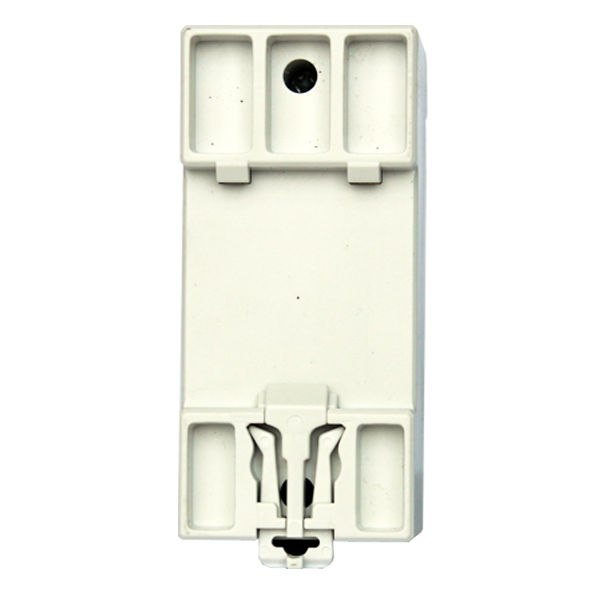
Every electrical environment demands a specific connection method. Choosing the correct meter category ensures safe operation and integration capability.
Meters connect to the circuit via two primary methods. Understanding your amperage limits dictates your choice.
Direct pass-through models allow the main power wire to route directly through the meter terminals. These units typically rate between 45A and 100A, depending on the specific design. Pass-through meters work best for low-to-medium loads, such as residential apartments or light office spaces.
High-amperage applications require a different approach. Routing 200A main lines through small meter terminals is physically unfeasible and dangerous. An External Current Transformer (CT) meter solves this. You clamp the CT around the main wire. It steps down the high current to a measurable level, allowing the meter to calculate the load safely from a distance.
Basic meters display numbers on a screen. Advanced applications require connectivity to transmit this data automatically.
Pulse Output: Basic remote tracking relies on a pulse output. The meter emits a tiny electrical pulse per measured unit (e.g., 1000 pulses/kWh).
RS485 Modbus: Larger buildings use Building Management Systems (BMS). RS485 connections utilizing the Modbus-RTU protocol integrate the meter directly into these central servers.
Real-time cloud tracking demands a step up in technology. Transitioning to a fully integrated smart energy meter allows wireless data pushing via WiFi or cellular networks. Facility teams can monitor usage from remote dashboards.
Property managers dealing with difficult collections often require automated enforcement. They evaluate the STS prepaid meter configuration for this scenario. Tenants purchase utility credits in advance. The meter automatically cuts off the relay if the credit drops to zero, eliminating tenant debt risk entirely.
Solid-state electronics provide excellent reliability. However, user error during installation ruins measurement integrity immediately. Sub-meter deployment is not a casual weekend project.
We strongly advise using licensed electricians for all installations. DIY enthusiasts routinely make critical errors. Phase miswiring causes immediate short circuits. Over-tightening terminal screws causes micro-cracks on the internal printed circuit board (PCB). Under-tightening leads to terminal arcing and false load alarms. Professionals carry the correct calibrated torque screwdrivers required for DIN rail hardware.
Meters demand strict environmental compliance to maintain their calibration. You cannot simply stuff them into a random cabinet slot.
Vertical Alignment: Meters must mount vertically. Mechanical analog meters suffer up to 10% measurement error from just a 5° tilt. Digital meters lack spinning discs but still strictly adhere to a <2° tilt allowance to maintain terminal contact integrity.
Clearance Distances: Electromagnetic interference distorts readings. Keep the meter ≥400mm away from any high-current wires exceeding 100A. Maintain ≥0.5m clearance from active heat dissipation pipes.
Ergonomics: LCD screens suffer from limited viewing angles. Install the meter dial center between 1.5m and 1.8m above ground level. If mounting inside a closed switchgear cabinet, it must sit ≥0.7m high for readable access.
Input routes strictly to power. Output routes strictly to the load. Reversing these cables causes instant read failures. CT meters require even closer attention. Technicians must correctly pair L1 to K1, and L2 to K2. Reversing CT polarity invalidates all readings and requires a complete system reset.
The market floods buyers with unverified proprietary claims. Selecting the right unit requires a disciplined procurement framework. You must verify international compliance, balance your budget, and map your space.
Never trust marketing buzzwords regarding accuracy. Ensure your chosen units carry recognizable, verifiable certifications. The two most critical standards are IEC 62053 (for measuring equipment accuracy) and EN 62052-11 (for general safety and testing). If a manufacturer cannot provide a data sheet referencing these specific codes, remove them from your shortlist.
Weigh budget models carefully against long-term reliability needs. A cheap, uncertified budget meter suffices for casual DIY monitoring. Perhaps you just want to track a garage workshop out of curiosity. However, commercial sub-billing requires certified Class 1.0 accuracy. Utilizing a Class 2.0 budget meter for tenant billing leaves property managers legally vulnerable during invoice disputes.
Do not order hardware before opening your switchgear panel. Advise your electrical team to map out the consumer box space physically. Count the exact number of available 18mm modules on the 35mm rail. Next, verify the maximum amperage per isolated circuit. Matching these two metrics prevents frustrating return shipments and stalled installation days.
Compliance and Pre-Procurement Checklist | ||
Evaluation Step | Action Required | Goal |
|---|---|---|
1. Circuit Assessment | Determine Phase (Single vs Three) and max Amperage. | Prevent hardware overload. Decide between pass-through vs CT. |
2. Space Mapping | Measure free 18mm slots on the 35mm DIN rail. | Ensure the new meter physically fits in the cabinet. |
3. Certification Check | Request IEC 62053-21 or EN 62052-11 datasheets. | Guarantee Class 1.0 legal billing accuracy. |
4. Automation Needs | Determine if Pulse, RS485, or Smart Cloud is needed. | Align hardware with your BMS or remote viewing strategy. |
A DIN rail KWh meter serves as a highly precise, technical instrument. It eliminates guesswork and secures exact power consumption data. Choosing the right model relies heavily on matching amperage limits, phase requirements, and connectivity needs directly to your specific panel layout. Careful planning prevents costly hardware mismatches.
Always prioritize baseline stability. Focus on essential features like Class 1.0 accuracy, non-volatile memory, and strict vertical installation compliance. Flashy but unstable supplementary features, like untested Bluetooth integrations, often fail in harsh electrical environments. Stick to verified industry standards, isolate your circuits properly, and always rely on licensed professionals for physical mounting and wiring.
A: No. It is designed for downstream sub-metering. The utility meter remains the legal financial point of contact for the grid, while the sub-meter handles internal allocation. You cannot use a DIN rail unit to dispute your primary grid provider's overarching invoice.
A: Quality meters utilize non-volatile memory. The LCD will turn off during an outage, but historical consumption data is permanently retained. It resumes calculating seamlessly upon power restoration. You do not need to reprogram the totalizer after a grid failure.
A: When certified to IEC 62053-21 Class 1.0, they offer <±1% variance. This makes them functionally as accurate as standard utility meters for their specific circuit. They capture parasitic loads effectively if the starting current threshold is adequately low.
A: Direct pass-through is standard for circuits up to 45A–100A (model dependent). For main lines exceeding the meter's rated capacity, an external CT model is mandatory for safety and accuracy. Routing heavy loads through small pass-through terminals creates severe fire hazards.


