


Views: 0 Author: Site Editor Publish Time: 2026-06-05 Origin: Site


Rising utility costs and complex home power setups, like solar integration, demand immediate attention from homeowners. You can no longer effectively manage what you cannot measure in real time. Granular energy visibility is now essential for modern households to keep expenses under control.
Standard utility bills only provide lagging, aggregate data at the end of the month. This leaves homeowners and facility managers guessing about daily usage peaks. You need localized, device-level insights to measure the actual return on energy-saving initiatives.
A Wi-Fi-enabled Tuya smart energy meter offers a standardized, highly integrated solution for live monitoring. It functions flawlessly provided the hardware matches your electrical panel's specific phase and capacity requirements. You will soon understand how to select, size, and safely deploy these devices for maximum efficiency.
Non-Invasive Installation: CT (Current Transformer) clamp models allow for safe monitoring without cutting live wires.
Solar Ready: Bidirectional metering is non-negotiable for homes with PV systems to track both production and grid-return.
Ecosystem Lock-In: Tuya compatibility guarantees integration with the Smart Life app, but requires a stable 2.4GHz Wi-Fi signal at the metal electrical panel.
Form Factor Matters: Panel space dictates the choice between a standalone CT hub and a dedicated DIN rail KWh meter.
The smart home market features countless isolated apps. Tuya changes this dynamic through platform standardization. Tuya operates a Platform-as-a-Service (PaaS) model. They provide reliable cloud architecture to hardware manufacturers. You do not need to buy proprietary, single-brand hubs to monitor your electricity. Devices connect directly to your home network and sync through the widely used Smart Life application. This unified approach prevents vendor lock-in and simplifies device management.
Data visualization forms the core value of this ecosystem. Once connected, the App UI transforms raw electrical currents into readable graphics. Users experience:
Hourly bar charts tracking peak consumption times.
Daily line graphs showing base-load electricity usage.
Monthly aggregation reports for budget forecasting.
Raw data export capabilities via Excel or CSV for personal analytics.
Monitoring only solves half the problem. Automation triggers unlock the true potential of your electrical data. You can integrate power consumption metrics into broader smart home routines. Consider a scenario where multiple heavy appliances run simultaneously. You can set an automation rule in the app: if overall house amperage exceeds 60A, trigger a smart plug to turn off the pool pump. This active load balancing prevents main breaker trips.
We must also acknowledge the inherent risks of cloud connectivity. These devices rely entirely on external servers. If your home internet goes down, you temporarily lose remote visibility. Local data caching during network outages varies significantly by manufacturer. Some models store up to 30 days of offline data. Others lose granular hourly metrics the moment Wi-Fi drops. Always verify the offline storage capacity before purchasing a unit.
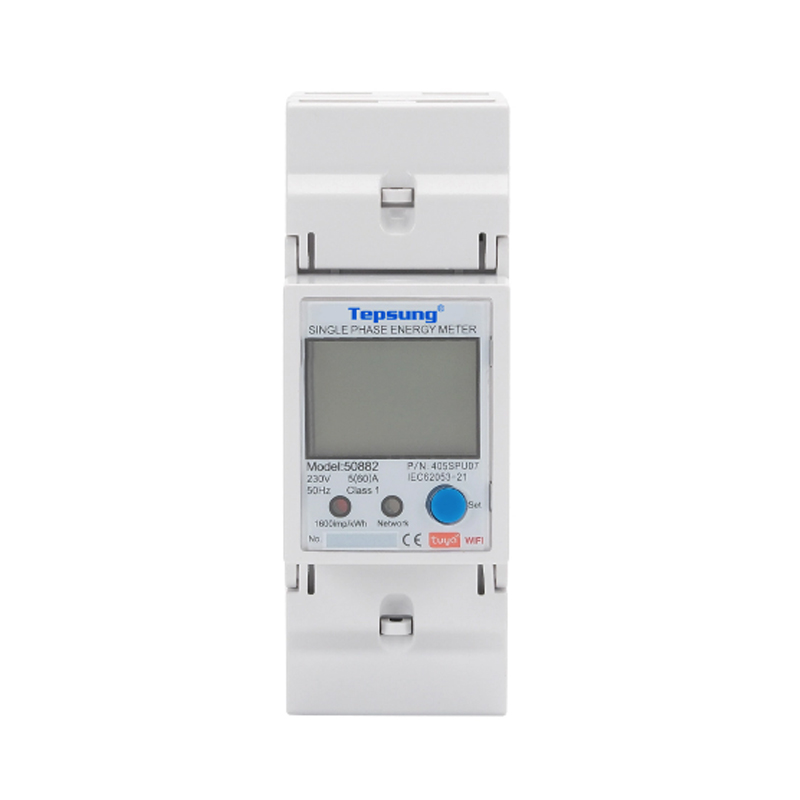
Choosing the right hardware requires understanding your electrical panel. The measurement method dictates both safety and installation complexity. You must choose between inline configurations and CT (Current Transformer) clamps.
Measurement Method | Installation Process | Safety Level | Best Application |
|---|---|---|---|
Inline Measurement | Requires cutting wires and routing live mains through the meter. | Low (Requires licensed electrician) | Sub-panels, dedicated single circuits. |
CT Clamps | Snaps around the existing insulated mains cable. | High (Non-invasive, no wire cutting) | Whole-home monitoring, DIY enthusiasts. |
Inline installation routes total household current directly through the device. This requires breaking the circuit and physically wiring the mains into the meter terminals. By contrast, snapping a split-core CT over the main cable takes seconds. You simply clip an 80A or 120A sensor around the insulated wire. From a safety perspective, non-invasive CT clamps eliminate the risk of arc flashes. Safety standards highly recommend CT clamps for DIY or light-residential applications.
Form factor represents the next major hurdle. Many modern solutions use a DIN rail KWh meter design. DIN rails are standardized metal tracks found inside modern breaker boxes. You must evaluate the structural requirements before purchasing. Do you have empty breaker slots available? Retrofitting older homes often presents physical constraints. If your panel lacks a DIN rail or empty slots, you must install an external enclosure to house the meter.
Solar households face unique challenges. Traditional meters fail solar PV owners because they only measure absolute current flow. They cannot distinguish between energy bought from the grid and energy sent back. Bidirectional capabilities solve this issue. Bidirectional logic separates consumed grid energy from surplus solar energy pushed back to the utility. Forward current registers as consumption. Reverse current registers as production. This bidirectional tracking remains essential for accurately calculating net metering credits.
You must accurately assess your home infrastructure before ordering any monitoring hardware. Installing the wrong phase equipment will result in faulty readings or complete incompatibility. You can identify your supply type by examining your main utility meter or main breaker panel. Look for the number of incoming hot wires.
Most residential homes globally utilize a single-phase supply. A single phase energy meter serves as the standard for these environments. It typically measures one live wire and one neutral wire. You will use this device to monitor total home consumption. You can also deploy it on specific high-draw 120V/240V circuits, such as electric vehicle chargers or heat pumps. Note that North American homes often use a split-phase 120/240V system. This still falls under single-phase logic but requires two CT clamps to measure both legs of the incoming power.
Conversely, a three phase energy meter targets heavier applications. You map these units to commercial environments, heavy HVAC systems, large agricultural workshops, or specific regional grids (common in parts of Europe and Australia). Three-phase power delivers three distinct alternating currents, requiring three separate CT sensors or a four-wire direct connection.
Phase Selection Chart | ||
Infrastructure Type | Target Audience | Typical Sensor Requirement |
|---|---|---|
Single Phase (Standard) | Apartments, typical houses | 1 CT Clamp (or direct 2-wire) |
Split Phase (US/Canada) | North American residential | 2 CT Clamps |
Three Phase | Commercial, heavy industrial | 3 CT Clamps |
Many buyers fall into a common purchasing trap. They assume a three-phase unit is an "upgrade" and buy it for a standard single-phase home. This complicates installation significantly. You end up inflating costs without gaining any added benefits. The App UI will show blank or irrelevant data channels, cluttering your dashboard. Always match the hardware to your actual electrical panel capacity.
While Wi-Fi monitors dominate smart home discussions, different scenarios demand entirely different architectures. You must contrast personal analytics with revenue collection and tenant management. Tuya Wi-Fi devices excel at data visualization. However, they lack the legal and technical frameworks required to bill tenants or cut off power automatically based on account balances.
This brings us to the Standard Transfer Specification framework. An STS prepaid meter serves as the global industry standard for landlord-tenant sub-metering. These devices use highly secure, encrypted 20-digit tokens. Tenants purchase electricity upfront. They enter the token into a keypad. The meter dispenses the exact kilowatt-hours paid for. When the balance hits zero, an internal relay disconnects the power.
How do you choose between these systems? Use the following decision matrix to guide your architectural strategy:
Choose Tuya Wi-Fi if: The goal is personal energy efficiency. You want solar tracking. You plan to build smart home automation rules. You live in the house you are monitoring.
Choose STS Prepaid if: The goal is enforcing utility budgets. You manage rental property electricity. You need to prevent tenant arrears. You require a robust, offline-capable revenue collection system.
Attempting to use a standard Tuya meter for tenant billing often leads to disputes. Consumer smart monitors lack the tamper-evident seals and metrological certifications required for legal utility sub-metering. Always deploy STS technology when money changes hands.
Even the best hardware fails under poor deployment conditions. The Faraday cage effect represents the most common point of failure. Electrical panels are essentially grounded metal boxes. They block wireless signals exceptionally well. Placing a wireless monitor deep inside a closed metal electrical panel severely degrades Wi-Fi penetration.
We recommend pre-testing the environment. Place your smartphone inside the open panel. Check if you have at least two bars of stable 2.4GHz Wi-Fi. If the signal drops, you must rethink your strategy. Seek out models featuring external antennas. You can route the antenna wire outside the metal box, ensuring rock-solid connectivity to your router.
Next, you must understand accuracy tolerances. Industry standards divide meters into accuracy classes. Class 1 devices maintain a 1% error margin under standard loads. Class 2 devices allow for a 2% variance. You should frame your expectations appropriately. A consumer smart meter is designed for operational analytics and behavioral changes. You cannot use it to dispute utility bills down to the exact decimal. Utility companies use highly calibrated, sealed Class 0.5 or better equipment.
Finally, we must emphasize safety and compliance. Opening your main breaker panel exposes you to lethal busbars. A single slip of a screwdriver can cause catastrophic injury. We strongly reinforce the necessity of hiring a licensed electrician for anything requiring panel faceplate removal. Do not compromise Authoritative trustworthiness or your personal safety to save a minor installation fee. Even non-invasive CT clamps require working near live, uninsulated lugs in some older panels.
A Tuya Wi-Fi smart energy meter successfully bridges the gap between passive utility consumption and active energy management. By moving from monthly paper bills to live digital insights, you gain the power to optimize your household efficiency. You can detect energy hogs, balance electrical loads, and ensure your solar arrays perform as promised.
Before purchasing your hardware, follow these critical next steps:
Verify your household phase requirements to choose the correct model.
Check your electrical panel space to confirm DIN rail compatibility.
Confirm 2.4GHz Wi-Fi penetration at the exact installation site.
Ensure the selected model supports bidirectional tracking if you plan to monitor solar production.
A: Yes, but functionality becomes severely limited. Without internet, the device cannot upload data to the Tuya cloud. You lose remote App access and real-time visualization. However, many models feature local network caching. They store limited consumption data internally and sync it to the cloud once connectivity is restored.
A: A direct-connect meter routes the actual electrical current through its internal terminals, requiring you to cut and strip live wires. A CT (Current Transformer) clamp offers non-invasive installation. It simply snaps around the existing insulated mains wire to measure the magnetic field, providing a much safer setup process.
A: Yes. Most North American homes use a 120/240V split-phase system. You will need a specific single-phase model equipped with two CT clamps. One clamp measures Line 1, and the second clamp measures Line 2. The device then aggregates both readings to calculate your total home power consumption.
A: Bidirectional monitors use forward and reverse current detection mechanisms. When you pull power from the utility, the current flows in one direction (forward). When your solar panels produce excess energy and push it to the grid, the current flows backward (reverse). The meter records these distinct flows independently.


