


Views: 0 Author: Site Editor Publish Time: 2026-04-15 Origin: Site


Smart meters have revolutionized the way utilities manage energy usage. These devices not only measure energy consumption but also transmit real-time data remotely to utility companies, enabling efficient billing, improved grid management, and accurate monitoring. In this article, we’ll explore how smart meters transmit data remotely, the technologies used in their communication, the benefits of remote data transmission, and the security measures in place to protect this data.
Smart meters collect and transmit data about electricity consumption, voltage levels, and other relevant parameters in real time. Unlike traditional meters, which require manual readings, smart meters allow utilities to remotely monitor energy usage, offering more accurate and timely information. The data collected by smart meters is sent directly to the utility provider for analysis, which can help in everything from billing accuracy to system optimization.
Smart meters collect data through sensors that continuously monitor energy consumption. This data is typically stored temporarily within the meter until it’s transmitted to the utility provider. The readings from the meter include detailed information such as:
· Energy consumption: The total amount of energy used by the consumer.
· Voltage fluctuations: Variations in the voltage supply can indicate potential issues.
· Power quality: An assessment of the overall quality of the power being supplied.
Real-time data transmission from smart meters allows for continuous tracking of consumption patterns. This is critical not only for accurate billing but also for identifying inefficiencies or issues within the power grid. The ability to make data-driven decisions ensures that energy distribution is optimized, reducing energy waste and improving the efficiency of the power grid.
Smart meters rely on several communication technologies to transmit data to utilities. The choice of communication method depends on factors like distance, data volume, and cost. The most common communication technologies used in smart meters include:
Radio Frequency (RF) communication is one of the most widely used technologies for transmitting data from smart meters. RF networks use radio signals to send data to nearby collection points known as data concentrators. These concentrators aggregate the data from multiple meters and send it to the utility provider.
· Cost-Effective: RF networks are relatively inexpensive to set up and maintain.
· Scalability: RF communication networks can be easily expanded to accommodate more meters.
· Reliability: RF communication works well in urban and suburban areas where the distance between meters and concentrators is relatively short.
Cellular communication uses the same technology as mobile phones to transmit data. Smart meters equipped with cellular modules can send data directly to the utility provider via 4G or 5G networks, without the need for a local data concentrator. This method is commonly used in rural or remote areas where RF networks may not be feasible.
· Wide Coverage: Cellular networks have extensive coverage, including rural and remote areas.
· Real-Time Data Transfer: Cellular networks allow for faster transmission of real-time data.
· Less Infrastructure Required: Cellular networks reduce the need for additional infrastructure like data concentrators.
Power Line Communication (PLC) uses the existing electrical grid to transmit data. PLC technology allows smart meters to send data through the same power lines that deliver electricity. This is an ideal solution for areas where RF or cellular communication may be less effective.
· Leverages Existing Infrastructure: PLC does not require additional infrastructure, as it uses the existing power lines.
· Good for Dense Areas: PLC works well in densely populated urban environments.
· Reliable: Since it uses power lines, PLC tends to be more reliable in some areas compared to wireless communication.
In certain situations, Wi-Fi or other wireless technologies can also be used for smart meter data transmission. These technologies are typically used in homes or small businesses where a Wi-Fi network is already in place. Wi-Fi-enabled smart meters can send data directly to utility providers via the internet, reducing the need for additional communication infrastructure.
· Easy Integration: Many households already have Wi-Fi networks, making integration simpler.
· Low Power Consumption: Wi-Fi-enabled smart meters consume less power compared to other wireless communication methods.
· Simple Setup: Wi-Fi networks are straightforward to set up and maintain.
Smart meters don’t simply measure and store data—they transmit it to utility companies for analysis and action. Once the data is collected, it’s sent through secure communication networks to utility providers, where it can be used for various purposes such as billing, load management, and grid optimization.
The data transmission process typically follows these steps:
Collection: Smart meters continuously collect data on energy consumption and other parameters.
Aggregation: The data is aggregated, usually by a local data concentrator, which collects data from multiple smart meters.
Transmission: The aggregated data is transmitted via RF, cellular, PLC, or Wi-Fi to the utility provider’s central system.
Analysis: The utility provider analyzes the data to identify patterns, optimize energy usage, and manage billing.
Billing: Based on the data, utilities generate accurate bills for consumers, reducing errors and disputes.
Data is typically transmitted in real time, allowing utility providers to monitor energy usage continuously. This is particularly useful for identifying spikes in usage or detecting system issues such as power outages or equipment failures. Real-time data transmission ensures that any anomalies can be addressed quickly, improving system reliability and efficiency.
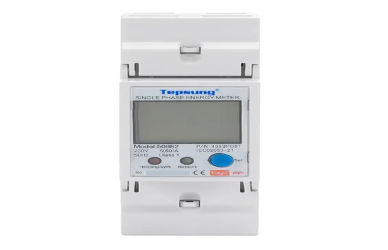
Remote data transmission from smart meters offers several key benefits for both utilities and consumers.
Benefit | Prepaid Smart Meters | Postpaid Smart Meters |
Efficiency | Immediate payment before consumption | Payment after consumption |
Real-Time Data | Real-time data transmission | Real-time data collection and billing |
Consumer Awareness | Encourages energy conservation | Provides feedback for usage patterns |
Billing Accuracy | Prevents errors, ensures accurate billing | Reduces errors in post-consumption billing |
Cost-Effective | Lower administrative costs | Ideal for large-scale billing |
Grid Optimization | Better load management and demand response | Helps prevent system overloads |
· Improved Billing: Utilities benefit from accurate, real-time billing, reducing billing disputes and improving customer satisfaction.
· Grid Efficiency: Smart meters enable utilities to monitor and control energy distribution more efficiently, reducing energy loss and improving grid stability.
· Energy Conservation: Remote monitoring of energy consumption allows utilities to encourage energy-saving behavior and support demand response programs.
· Accurate Billing: Consumers are billed for the energy they actually use, reducing overcharges or undercharges.
· Increased Control: Consumers can monitor their energy consumption in real time, helping them to manage their usage and reduce costs.
· Fewer Disruptions: Remote data transmission allows utilities to address issues such as outages or voltage fluctuations more promptly, minimizing service disruptions.
Security and privacy concerns are top priorities when it comes to transmitting data from smart meters. Given the sensitive nature of the data being transmitted, it is critical for utilities to implement robust security measures. The use of secure communication technologies ensures that data is protected from unauthorized access, preventing potential breaches and tampering. As smart meters become more widespread, the importance of ensuring data security and consumer privacy increases.
Smart meters use encryption to protect the data transmitted to the utility provider. Encryption ensures that the data is unreadable to unauthorized parties, safeguarding consumer privacy and preventing potential tampering. This method guarantees that sensitive data such as energy consumption patterns is securely transmitted over the network, reducing the risks associated with data breaches. It also ensures that utilities can maintain the integrity and confidentiality of consumer information.
In addition to encryption, secure communication protocols are used to authenticate and verify data, ensuring that it comes from a trusted source. These protocols prevent unauthorized access and ensure the integrity of the data being transmitted. Communication technologies such as SSL/TLS encryption and other advanced authentication methods help secure the transfer of data, making it more difficult for malicious actors to interfere with or manipulate the information. These protocols also help detect and prevent any fraudulent activities during the transmission process.
Utility companies must also adhere to data privacy laws and regulations to protect consumer information. Consumer data, such as energy usage patterns, must be handled in compliance with local privacy regulations, ensuring that it is used responsibly and ethically. Privacy regulations, such as the GDPR in Europe or similar frameworks in other regions, dictate how data should be collected, stored, and shared. Utilities are required to ensure transparency in how consumer data is managed and to provide consumers with control over their data. This includes obtaining consent for data collection and offering consumers the ability to opt out or request access to their personal energy usage data.
Remote data transmission ensures accurate billing, allows consumers to monitor their energy usage in real time, and helps utilities address issues quickly, leading to fewer service disruptions.
Smart meters use several technologies, including RF (Radio Frequency), cellular networks, PLC (Power Line Communication), and Wi-Fi to transmit data remotely to utility companies.
Data is collected by smart meters, aggregated by data concentrators, and transmitted through secure networks to the utility company’s central system, where it is analyzed and used for billing and energy management.
Yes, smart meters use encryption and secure communication protocols to protect transmitted data, ensuring that it remains safe from unauthorized access and tampering.
Remote data transmission in smart meters is a vital aspect of modern energy management, benefiting both utilities and consumers. By using technologies such as RF, cellular networks, PLC, and Wi-Fi, smart meters transmit real-time energy usage data that allows utilities like Zhejiang Tepsung Electric Meter Co., Ltd. to optimize billing, improve grid management, and support demand response programs. With the added benefits of accurate billing, improved energy conservation, and real-time monitoring, smart meters are driving the future of energy systems. Proper encryption and secure communication protocols ensure that the data remains safe, protecting consumer privacy while enabling more efficient and sustainable energy usage.


