


Views: 0 Author: Site Editor Publish Time: 2025-09-19 Origin: Site


In residential construction and renovation projects, few elements are as critical yet overlooked as the electric meter box. This essential enclosure not only houses the meter that tracks household electricity consumption but also provides protection for wiring, connections, and internal components. A one-time installation decision can affect maintenance costs, safety, and homeowner convenience for decades. By focusing on post-installation efficiency and ease of servicing, property owners, electricians, and contractors can ensure a reliable power distribution system that minimizes downtime and reduces future labor and parts costs.
When you install an electric meter box, you’re not just mounting a piece of metal or plastic on a wall—you’re making a strategic investment. A well-designed enclosure will ease initial installation, streamline routine inspections, and simplify any future upgrades or repairs. Conversely, a poorly specified box can lead to tangled wiring, confusing breaker layouts, and tricky access points that frustrate homeowners and electricians alike. Over the typical 20–30-year lifespan of a meter box, even small inefficiencies add up: extra labor hours, higher call-out fees, and potential safety hazards if maintenance is delayed. By prioritizing installation convenience and maintenance efficiency up front, you secure a hassle-free electrical system that benefits all stakeholders.
Consistency is the cornerstone of efficient installation. When installers use standardized procedures, they reduce variability, avoid mistakes, and speed up project timelines. Here are the critical elements of a standardized installation process:
Pre-Installation Planning:
Site Survey: Confirm wall structure (brick, concrete, timber), exposure to moisture, and cable routing paths.
Power Requirements: Verify meter type (single-phase vs. three-phase), main breaker rating, and number of circuits.
Enclosure Selection: Choose a box whose dimensions, IP rating, and mounting pattern match on-site conditions and local codes.
Mounting and Alignment:
Leveling Tools: Use spirit levels and laser guides to ensure the box is perfectly vertical and horizontal.
Template Drilling: Many modern enclosures come with laser-cut mounting templates that allow quick, precise hole placement. Drilling through a template eliminates guesswork and saves time.
Anchoring Hardware: Select appropriate anchors—rawl plugs for masonry or toggle bolts for hollow walls—to secure the enclosure firmly, even under load.
Cable Entry Preparation:
Pre-Cut Knockouts: Use enclosures with factory-punched knockouts sized for common conduit and cable gland dimensions.
Unused Entries: Immediately seal any unused holes with blanking plugs to maintain the enclosure’s IP rating and prevent pest or moisture ingress.
Wiring Sequence:
Main Incoming Feed: Land the mains conductors (phase, neutral, earth) first on clearly marked terminals.
Outgoing Circuits: Group circuit breakers logically—lighting, kitchen, HVAC, etc.—to facilitate future troubleshooting.
Torque Settings: Apply a calibrated torque driver to each terminal bolt, adhering to manufacturer specifications. Proper torque prevents loose connections, which are a leading cause of arcing faults.
Final Inspection Checklist:
Integrity Tests: Perform insulation resistance tests (megger tests) to verify no short circuits or earth leaks.
Seal Verification: Confirm door seals are intact and lock mechanisms engage smoothly.
Label Audit: Ensure all labels, busbars, and breakers reflect the as-installed configuration.
By following a rigorous, repeatable sequence, installers cut average wiring time by 15–25% and reduce call-backs for corrections by up to 40%. The result is faster project turnover and greater customer satisfaction.
Once power is flowing, the true test of efficiency appears during maintenance and troubleshooting. Clear, intelligible labeling and a logical terminal arrangement drastically reduce the time electricians spend tracking down circuits or deciphering undocumented changes.
Permanent Engraved Labels: Avoid handwritten stickers that fade. Laser-engraved nameplates on door panels and breaker handles remain legible for decades.
Color-Coded Terminals: Consider enclosures with multi-colored terminal blocks for phase identification (e.g., red for L1, yellow for L2, blue for L3, green for earth). This visual cue speeds up fault tracing.
Circuit Directory: Inside the door, attach a laminated circuit directory listing each breaker’s load—“Kitchen Lighting,” “Air Conditioner,” “Garage Outlet,” etc. Numbering circuits sequentially or in functional groups aids future expansion.
Input vs. Output Separation: Physically separate the main feed terminals from branch circuit terminals by using distinct busbars or insulated partitions. This prevents accidental contact and clarifies power flow.
DIN Rail Positioning: Mount terminal blocks and modular components on a horizontal DIN rail with adequate spacing. Overcrowding leads to heat buildup and makes adding new modules difficult.
Service Space: Ensure stiff cables (like armored or XLPE-insulated feeders) have enough slack and strain relief near the entry point, without cramming them behind breakers or additional wiring.
An electrician who can glance at a meter box and immediately identify each circuit, its rating, and its breaker location can resolve faults up to 50% faster than one forced to trace wires manually. That efficiency translates directly to lower service bills and faster restoration of power after outages.
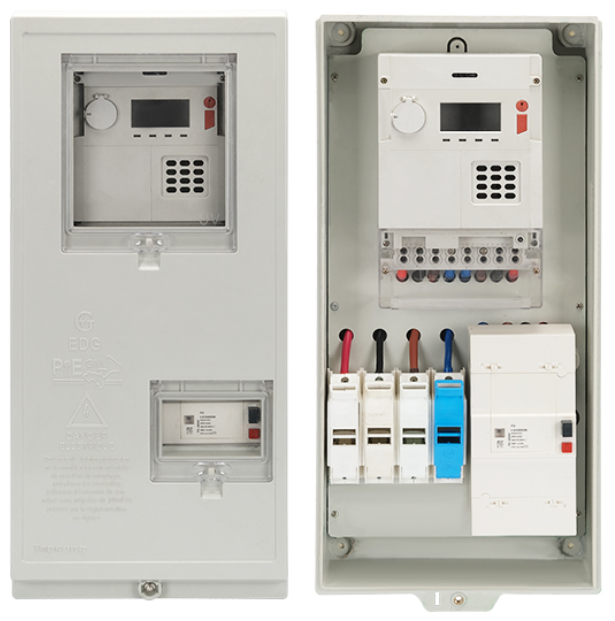
A maintenance-friendly enclosure is one that technicians can open, inspect, and secure quickly—without wrestling with rusted hinges or fumbling for the right key. Thoughtful accessibility features make routine inspections smoother and safer.
Many contemporary meter boxes incorporate quarter-turn captive screws or swing-latch handles that require no separate tools. Technicians can open the door in seconds rather than spending time searching for the correct screwdriver bit. Captive screws ensure no small parts are lost on the floor, which could lead to dropped hardware into live compartments.
For residential applications, tamper resistance and child safety are paramount. Enclosures with multi-point locking engage the door at two or three locations—top, middle, and bottom—preventing access if one latch is forced. Padlock-compatible hasps offer an extra layer of security for properties in shared or communal areas.
Some meter boxes feature integrated polycarbonate or tempered glass windows that allow quick meter reading without opening the door. This is especially useful for utility inspectors, billing personnel, or homeowners who prefer to verify consumption visually. A well-placed viewing port also eliminates unnecessary door openings, reducing wear on seals and gaskets.
Continuous Piano Hinges: Provide uniform support along the entire door edge, resisting warping over time.
Integrated Door Stays: Hold the door open at a fixed angle—ideal when technicians need both hands free for wiring tasks.
By combining tool-less access, secure locks, and transparent windows, a meter box becomes not just a protective shell but a user-centric platform that accelerates inspections and discourages improper or unauthorized access.
As households evolve—adding electric vehicle chargers, solar inverters, or home automation hubs—the meter box seldom stays static. A modular interior layout ensures that upgrades and repairs can be conducted without ripping out the entire enclosure.
Removable Partition Panels: Removable or sliding panels allow a section of the enclosure to be isolated for upgrades (e.g., installing a new sub-meter) while keeping the rest live. This “hot-swap” capability can reduce service interruptions.
Interchangeable DIN Rail Sections: Some enclosures include pre-cut slots or hinged DIN rails that swing out for easy module access. Technicians can pull half-rail assemblies forward, swap breakers or communication modules, then latch them back—without needing to remove entire component assemblies.
Pre-Wired Communication Modules: For smart metering or remote monitoring options, offer plug-and-play communication cards that snap into dedicated slots. When upgrading from basic to advanced functionality, electricians simply pop out the old card and insert the new one—no rewiring required.
Spare Module Bays: Reserve one or two empty bays in the DIN rail layout for future expansion. Whether adding surge protection devices, residual current monitors, or an EV charger circuit, having pre-allocated space speeds up on-site modifications.
A modular approach safeguards against obsolescence. Instead of replacing an entire meter box every time technology or household power demands change, homeowners can cost-effectively upgrade only the needed modules—minimizing waste and maximizing return on investment.
No maintenance strategy is complete without empowering end users. A meter box that offers simple, intuitive ways for homeowners to monitor their power usage and perform basic checks can reduce unnecessary service calls and promote proactive fault detection.
Built-In LCD Screens: Some modern residential meter boxes integrate a small LCD that scrolls through voltage, current, cumulative kilowatt-hours, and power factor. These screens often include backlighting for visibility in low-light basements or utility closets.
Rotary Dials with LED Indicators: For simpler setups, dials with LED blinking can indicate real-time load trends—fast blinking for high demand, slow blinking for low demand.
Circuit Challenge Tests: A dedicated button can momentarily simulate a slight overcurrent, verifying that breakers trip as expected.
Status LEDs for Modules: Communication modules and surge protectors often include green “healthy” LEDs and red or amber “fault” LEDs. Homeowners can glance at the box and know if any component requires professional attention.
Attach a simplified wiring schematic inside the cabinet door that shows the basic flow of power from the main feed through the meter, breaker bank, and branch circuits. Even non-technical occupants gain a clearer understanding of what components they’re interacting with—improving coordination when calling an electrician.
For tech-savvy homeowners, meter boxes can be factory-preconfigured to pair with smartphone apps via Bluetooth or Wi-Fi. These apps often display real-time power usage charts, historical consumption trends, cost estimates, and alert notifications for voltage fluctuations or device overloads.
By engaging homeowners directly, manufacturers and installers reduce “pilot light” service calls (where technicians find nothing wrong) and foster a shared responsibility for electrical system health. Educated users catch minor issues early—like a loose neutral or a tripped residual current device—before they escalate.
Selecting the right meter box for your home is an investment in safety, convenience, and future-proofing. At Zhejiang Tepsung Electric Meter Co., Ltd., we specialize in maintenance-friendly enclosures designed for easy installation, clear labeling, modular upgrades, and homeowner-focused monitoring. Whether you need a simple single-phase unit or a Wi-Fi-enabled smart box with DIN-rail expansion bays, Tepsung’s customizable solutions streamline both initial setup and long-term servicing.
Discover how our full line of residential electric meter boxes can reduce labor time, minimize service calls, and empower occupants with real-time energy insights. Visit www.tpselec.com to explore detailed specifications, download installation guides, and review customer success stories. For personalized advice or a tailored quotation, simply complete the contact form on our website or email us directly at sales@tpselec.com. Partner with Tepsung and ensure your next meter box installation delivers decades of hassle-free performance.


