


Views: 0 Author: Site Editor Publish Time: 2025-09-18 Origin: Site


Industrial parks have become the backbone of manufacturing economies worldwide. Hosting dozens, sometimes hundreds, of factories, warehouses, and facilities, these parks demand robust power infrastructures capable of meeting vastly different energy needs. From heavy machinery in metal fabrication units to precision electronics assembly lines, each tenant places unique load requirements on the shared electrical network. Managing such complexity manually is daunting: disparate meter locations, multiple utility providers, and siloed billing processes all drive up operational costs and increase the risk of errors.
Traditional meter installations compound these challenges. Separate enclosures for electricity, water, and gas make data collection fragmented and labor-intensive. Technicians must navigate multiple physical locations, log readings on paper, and manually reconcile consumption data—an error-prone workflow that often leads to billing disputes, delayed invoices, and poor visibility into energy usage patterns. For energy managers tasked with controlling costs, ensuring compliance, and driving sustainability initiatives, this setup is simply untenable.
Modern energy management demands integrated, data-driven solutions. At the heart of this transformation is the humble electric meter box, which has evolved from a passive protective enclosure into a centralized intelligence hub. By combining multi-utility metering, partitioned billing, remote data acquisition, and seamless EMS integration into a single, modular platform, advanced meter boxes streamline operations, enhance accuracy, and unlock actionable insights for energy optimization.
One of the most significant advances in industrial metering is the integration of multiple utilities within a single meter box. Instead of installing separate boxes for electricity, water, and gas, energy managers now deploy multi-utility enclosures that house dedicated modules for each resource. This approach offers four compelling benefits:
Space and Cost Savings
Reducing the number of separate enclosures saves valuable floor or wall space—an especially important consideration in densely packed control rooms or outdoor substations. Fewer enclosures also translate to lower procurement costs, reduced installation labor, and minimized cabling infrastructure.
Consistent Data Collection
Housing all utility meters in one centralized location ensures that data is collected under the same environmental conditions, communication network, and power supply. This uniformity reduces discrepancies caused by varying channel delays or sensor types.
Simplified Maintenance
Technicians perform routine calibration, testing, and firmware updates from a single access point. Multi-utility enclosures with tool-less door releases and modular meter slots make these tasks faster and less error-prone.
Unified Communication Protocols
Modern multi-utility boxes often feature integrated gateways that convert diverse meter outputs—such as water meters using M-Bus, gas meters using pulse outputs, and electricity meters using Modbus—into a single, harmonized data stream. This consolidated stream can then feed into supervisory systems without protocol converters or additional gateways.
Tepsung’s electric meter boxes exemplify this integrated philosophy. Their standard offerings include DIN-rail mounted slots for up to three electricity meters, two water meter modules, and one gas meter interface. Each slot supports hot-swappable metering units, enabling on-site upgrades without powering down the entire system. Built-in RS485 and M-Bus ports, along with optional 4G/NB-IoT gateways, ensure that all utility data flows securely to the central server, ready for immediate analysis.
Industrial parks are rarely single-entity operations. More commonly, they consist of multiple tenants—each with dedicated power lines—or departments within a large organization that require individual billing. Traditional single-point metering makes equitable cost allocation a headache, leading to frequent disputes and manual reconciliation efforts. The solution lies in partitioned billing systems, which allocate costs accurately by subdividing circuits and assigning them to specific users.
Discrete Circuit Segmentation
Each tenant or departmental circuit is wired to its own meter module within the box. Clearly labeled on the enclosure door, these circuits are protected by individual breakers or fuses, preventing cross-circuit interference and ensuring each meter only measures its assigned load.
Expandable Line Capacity
As parks grow or tenants change, meter boxes must accommodate additional circuits. Tepsung’s designs offer modular busbar extensions and plug-in breaker carriers, allowing parks to scale from a handful of circuits up to dozens, all within the same enclosure footprint.
Embedded Protection and Safety
Beyond monitoring, integrated surge protection devices (SPDs) and residual current devices (RCDs) safeguard each line. This not only reduces downtime from electrical faults but also satisfies stringent safety regulations often enforced in industrial zones.
Visual and Digital Labels
In addition to laser-etched metal nameplates on the enclosure door, Tepsung meter boxes include electronic labeling options via their companion software. Facility managers can update tenant names, circuit IDs, and billing codes in real time—prints automatically to a status display or logs in the digital record.
By deploying partitioned billing meter boxes, industrial park operators eliminate manual meter reading errors, ensure transparent tenant billing, and foster trust with all stakeholders. Precise cost allocation also incentivizes tenants to conserve energy, driving collective efficiency gains.
Manual meter reading—sending technicians to each site with clipboards—simply doesn’t scale. For parks with tens or hundreds of meter boxes spread across vast areas, remote data collection is both a productivity booster and an accuracy enhancer. Automatic Meter Reading (AMR) and Advanced Metering Infrastructure (AMI) systems form the backbone of this capability.
On-Board Communication Modules
Tepsung meter boxes can be factory-equipped with Ethernet switches, Wi-Fi transceivers, cellular 4G/5G modules, or low-power wide-area network (LPWAN) radios such as NB-IoT and LoRaWAN. These modules gather consumption data from all integrated meters at user-defined intervals—ranging from one minute to once daily—and transmit it to a central headend system.
Data Aggregation and Verification
At the headend server, data packets from hundreds of meter boxes are collected, timestamped, and validated. Error-correction algorithms detect missing data, flag anomalies, and request retransmission, ensuring a near-100% data capture rate.
Visualization Dashboards
Once aggregated, the data appears in graphical dashboards that provide:
Load profiles showing consumption curves over time
Peak demand alerts that notify managers when usage approaches contractual limits
Power quality metrics including voltage dips, harmonics, and flicker
Comparative analytics across tenants, buildings, or production cells
Predictive Maintenance and Anomaly Detection
Advanced platforms use machine learning models trained on historical energy usage to spot outliers—such as sudden spikes that could indicate equipment faults, phase imbalances, or unauthorized power draws. Early warnings allow technicians to intervene before small issues escalate into costly failures.
By centralizing remote meter reading in one cohesive system, industrial parks slash labor costs associated with physical readings, improve billing accuracy, and gain access to deep insights that drive energy-saving initiatives. Tepsung’s meter boxes, with their rugged communication modules and secure data encryption, ensure seamless integration into any AMR/AMI architecture.
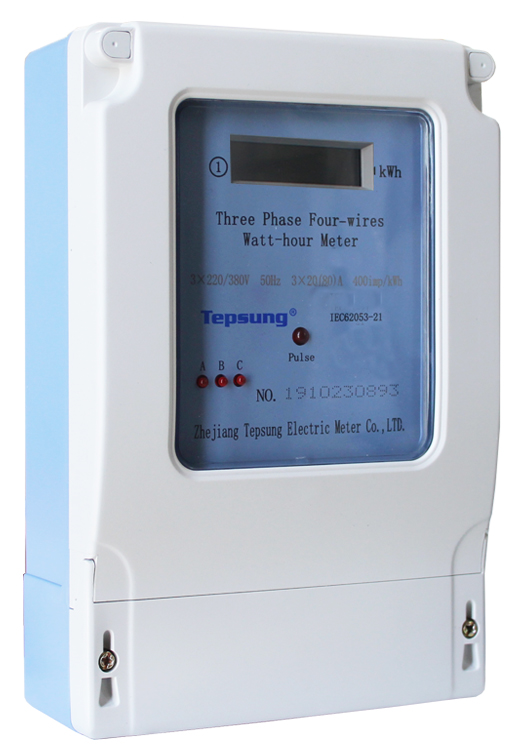
Collecting data is only the first step. To truly optimize energy usage, park operators must leverage Energy Management Systems (EMS) that unify consumption data, control operational schedules, and automate demand response. Electric meter boxes act as the vital data acquisition layer in this EMS stack.
Open Communication Protocols
Tepsung enclosures support a wide range of protocols—Modbus TCP/IP, BACnet, OPC UA, MQTT, and RESTful APIs—so they can plug directly into commercial EMS software. This interoperability reduces integration complexity and shortens project timelines.
Control Capabilities
Modern meter boxes can be configured not only to report data but to accept control commands. For instance, the EMS can remotely disable non-critical circuits during peak demand events or shed loads automatically when energy prices spike. These features require robust relay outputs or smart breaker interfaces built into the meter box.
Demand Response and Load Shifting
In regions where utilities offer demand response incentives, meter boxes with EMS connectivity can orchestrate load-shifting strategies—rescheduling non-essential loads to off-peak hours. Automated scripts triggered by price signals from the EMS help industrial users reduce energy bills and earn financial credits.
Renewable and Storage Integration
As parks adopt solar PV, wind turbines, or battery energy storage systems (BESS), the meter box must handle bi-directional power flows and integrate with inverter control protocols. Tepsung’s customizable solutions include metering modules rated for export metering, ESS integration, and synchronization signals for microgrid management.
By positioning electric meter boxes as intelligent nodes that both feed data into and execute commands from the EMS, industrial parks achieve a tightly coupled, automated energy ecosystem—one that continuously adapts to real-time conditions and business objectives.
Zhejiang Tepsung Electric Meter Co., Ltd. has extensive experience delivering turnkey metering solutions tailored for industrial parks worldwide. Below are two representative case studies:
Requirements:
50 outdoor meter boxes across 30 buildings
Salt-spray resistant materials (marine-grade aluminum with epoxy coating)
Integrated water and gas modules for tenant billing
Cellular 4G for remote data transmission
Solution Highlights:
IP66-rated enclosures with corrosion-resistant seals
Hot-swappable meter modules for easy maintenance
Built-in data logger with battery backup
Customized web portal delivering hourly reports and SMS alerts
Results:
35% reduction in field service visits
22% improvement in billing accuracy
Positive feedback from tenants on transparent consumption data
Requirements:
80 indoor meter panels in a multi-tenant facility
Partitioned billing by production line and department
SCADA integration via Modbus TCP/IP
Quarterly energy audits supported by detailed power quality logs
Solution Highlights:
Modular DIN-rail enclosures with expandable busbar systems
Electronic labeling software synchronized with the SCADA historian
Automated PDF report generation and FTP upload
Embedded harmonic analysis module for power quality monitoring
Results:
Energy audit preparation time cut by 60%
Identification and mitigation of harmonic distortion issues
Enhanced trust between park management and tenant companies
These successes underscore Tepsung’s commitment to flexible design, rigorous quality control, and responsive customer support. Every enclosure can be engineered with precise dimensions, specific communication protocols, and specialized coatings—ensuring that even the most demanding industrial parks receive a solution uniquely suited to their environment.
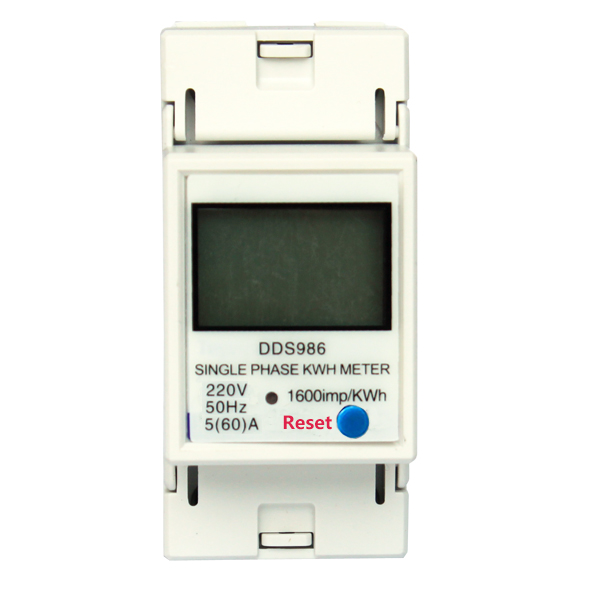
The evolution of electric meter boxes—from passive safes for meters to active participants in energy management—reflects the broader trend toward digitalization and integration in industrial operations. For industrial parks grappling with complex load profiles, multi-tenant billing challenges, and ambitious sustainability goals, selecting an advanced, customizable meter box is no longer an afterthought but a strategic imperative.
By embracing multi-utility integration, partitioned billing designs, centralized remote reading, and deep EMS connectivity, park operators unlock powerful tools for cost control, operational resilience, and environmental stewardship. Zhejiang Tepsung Electric Meter Co., Ltd. stands at the forefront of this transformation, offering modular, communication-ready, and highly durable meter boxes engineered for industrial-scale performance.
High-impact energy savings, streamlined maintenance, and data-driven decision-making all start with a single choice: the right electric meter box. Partner with Tepsung to build a future-ready energy management infrastructure—one that delivers clarity, control, and competitive advantage for years to come.


