


Views: 0 Author: Site Editor Publish Time: 2025-11-20 Origin: Site


Have you ever wondered how your electricity bill is calculated? That's where electricity meters come in. These devices measure your home's energy consumption, ensuring accurate billing. Understanding the importance of electricity meters is crucial for managing energy costs. In this post, you'll learn about different types of meters, their features, and installation tips to help you make an informed purchase.
Electricity meters have evolved over time, offering various technologies to measure energy consumption. Understanding the main types helps you pick the right meter for your needs.
These are the classic meters with a spinning aluminum disc and mechanical dials. They work on electromagnetic induction: electricity flowing through coils creates magnetic fields, making the disc spin. The faster it spins, the more electricity is used. Gears connected to the disc move dials that show total consumption in kilowatt-hours (kWh).
Advantages:
①Durable, with a long lifespan.
②Simple, reliable operation without electronics.
③Resistant to cyber-attacks.
④Usually less expensive.
Disadvantages:
①Mechanical parts wear out, reducing accuracy over time.
②Reading dials can be tricky and requires manual effort.
③No advanced features like remote reading or time-of-use pricing.
④Susceptible to tampering.
Digital meters replaced moving parts with electronic sensors and microprocessors. They measure voltage and current, convert signals to digital data, and display consumption on an LCD or LED screen.
Advantages:
①More accurate and reliable than analog meters.
②Easy-to-read digital display.
③Can store extra data like peak demand.
④No mechanical wear and tear.
Disadvantages:
①Higher cost than analog meters.
②Some models lack communication features.
③Vulnerable to power surges and electronic faults.
④Security varies by model.
Smart meters are advanced digital meters with two-way communication capabilities. They send consumption data directly to utilities and receive commands remotely. Communication may use cellular, radio frequency, or power line technologies.
Advantages: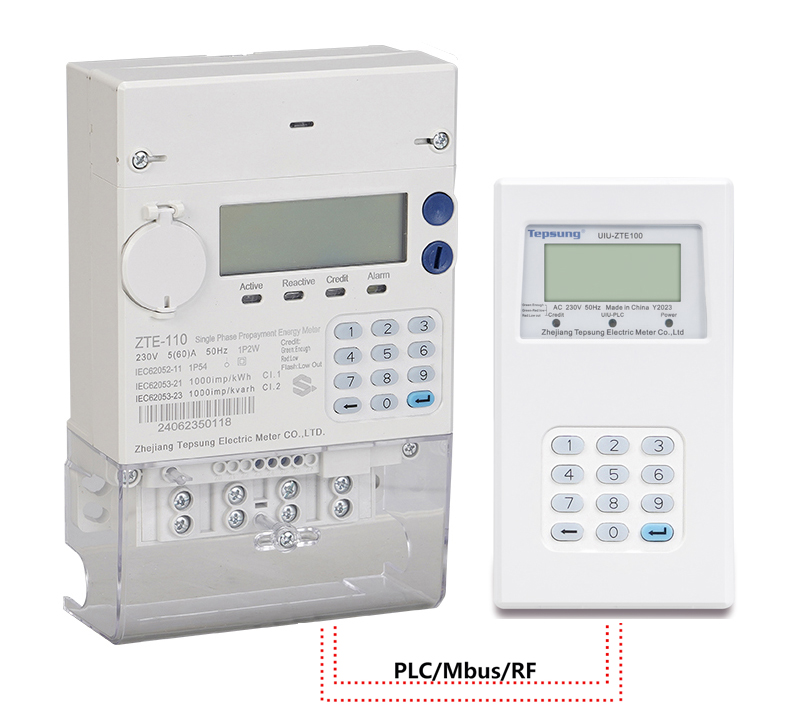
①No need for manual readings.
②Real-time energy data for consumers.
③Supports dynamic pricing and time-of-use rates.
④Enables remote service connection/disconnection.
⑤Helps utilities manage the grid efficiently.
Disadvantages:
①Higher initial cost.
②Installation and maintenance can be complex.
③Privacy and cybersecurity concerns.
④Requires reliable communication networks.
| Feature | Analog Electricity Meter | Digital Electricity Meter | Smart Electricity Meter |
|---|---|---|---|
| Measurement Method | Mechanical spinning disc | Electronic sensors | Electronic sensors + comms |
| Display Type | Mechanical dials | Digital LCD/LED | Digital with remote access |
| Moving Parts | Yes | No | No |
| Accuracy | Good, decreases over time | High | Very high |
| Communication | None | Limited or none | Two-way communication |
| Remote Reading | No | Usually no | Yes |
| Advanced Features | No | Some (peak demand, storage) | Real-time data, remote control |
| Typical Use | Older installations | Residential, commercial | Modern grids, energy management |
Understanding these types helps you select a meter that fits your application, budget, and future needs.
Note: When choosing a meter, consider the communication protocol compatibility to ensure seamless integration with your utility or energy management system.
Choosing the right electricity meter means understanding the key features that impact performance, reliability, and future needs. Here’s what to look for:
Accuracy is crucial because it directly affects your billing and energy management. Meters come with accuracy classes, such as Class 1.0 or Class 2.0, indicating their precision level. A Class 1.0 meter means it can measure within ±1% of actual consumption, suitable for most homes and small businesses. For industrial or commercial use, higher accuracy like Class 0.5 or 0.2 might be necessary.
Calibration ensures the meter maintains accuracy over time. Choose meters factory-calibrated and certified by recognized bodies. Regular recalibration may be required depending on usage and regulations.
Always check if the meter meets regional and international standards. Common certifications include:
MID (Measuring Instruments Directive) for Europe
ANSI (American National Standards Institute) in North America
IEC (International Electrotechnical Commission) worldwide
These certifications guarantee the meter complies with safety, accuracy, and performance requirements. Additional marks like CE or UL confirm product safety and quality.
Your choice depends on your electrical system:
Single-phase meters suit residential homes and small businesses with lower power demands.
Three-phase meters handle higher loads, typical in industrial or large commercial settings.
Using the wrong meter can cause inaccurate readings or damage.
Modern meters often include communication features for remote reading and data integration. Common protocols include:
Modbus: Popular in industrial environments.
DLMS/COSEM: Standard for smart meters globally.
Zigbee, Wi-Fi, LoRaWAN: Wireless options for smart homes or wide-area networks.
Cellular (GPRS, LTE-M, NB-IoT): For remote or large-scale deployments.
Ensure the meter’s protocol matches your utility or energy management system for seamless data flow.
Meters must withstand their installation environment. Look for:
IP ratings indicating protection against dust and water (e.g., IP54, IP65).
Operating temperature range suitable for your location.
Robust casing to resist physical damage.
Outdoor meters require higher protection than indoor units.
Energy needs evolve, so pick meters that can grow with you. Features to consider:
Expandable systems allowing more meters to be added easily.
Bidirectional metering for renewable energy integration like solar panels.
Support for electric vehicle (EV) charging and dynamic pricing.
Remote monitoring for real-time data access and management.
Choosing a future-ready meter saves costs and hassle later.
Electricity meters, no matter the type, share some key parts that make them tick:
Voltage Sensor: Measures the electrical pressure, or voltage, supplied to your property. It connects parallel to the power line.
Current Sensor: Measures the flow of electricity, or current, running through your circuits. It connects in series with your load.
Measurement Mechanism: This varies by meter type. In analog meters, it’s the spinning aluminum disc and gears. In digital and smart meters, it’s electronic sensors and a microprocessor.
Display Unit: Shows your electricity consumption. Analog meters use mechanical dials, while digital and smart meters have LCD or LED screens.
Communication Module (smart meters only): Enables two-way data exchange with utilities for remote reading and control.
Meters constantly monitor voltage and current to calculate energy use. The voltage sensor senses the potential difference, while the current sensor tracks how much electricity flows through. Digital meters use devices like current transformers or shunt resistors to safely measure current without disrupting your power.
Meters don’t just measure power; they measure energy over time, expressed in kilowatt-hours (kWh). Here's how it works:
Instantaneous Power (Watts) = Voltage × Current × Power Factor (accounts for efficiency).
Energy (Watt-hours) = Power × Time.
Since watt-hours can get large, meters convert to kilowatt-hours (1 kWh = 1,000 Wh).
Analog meters use the spinning disc speed, which reflects power consumption, to tally total energy. Digital and smart meters sample voltage and current signals rapidly, calculate power digitally, and sum it over time.
Reading your meter depends on its type:
| Meter Type | Reading Method | Data Format | Real-time Updates |
|---|---|---|---|
| Analog | Manual reading of mechanical dials | Cumulative kWh only | No |
| Digital | Digital display (LCD/LED) | Cumulative kWh, sometimes instantaneous load | Limited |
| Smart | Digital display, remote transmission | Granular kWh, demand, voltage, power factor | Yes |
Analog meters require careful reading of dials, noting the direction and position of each pointer.
Digital meters show a clear numerical reading, often cycling through additional info like voltage or peak demand.
Smart meters send data automatically to utilities and often provide consumers with real-time usage via apps or portals.
Installing electricity meters involves working directly with electrical circuits carrying high voltage and current. Safety must be your top priority.
Power Off First: Always cut power at the main breaker or service panel before starting. Confirm with a voltage tester that no electricity flows.
Wear Protective Gear: Use insulated gloves, safety glasses, and flame-resistant clothing to protect against shocks and burns.
Qualified Personnel: Only trained electricians or certified technicians should install or service meters.
Follow Codes: Adhere strictly to local electrical codes and utility regulations to ensure safety and compliance.
Inspect Equipment: Check meter and wiring for damage or corrosion before installation. Replace any faulty parts.
Use Proper Tools: Insulated tools designed for electrical work reduce risk of accidents.
While specific steps vary by meter type and local rules, the general process includes:
Mount Meter Socket: Securely attach the meter socket or base to a stable surface, level and at the correct height.
Connect Utility Wires: Attach incoming service wires to the meter socket terminals. Double-check correct phase sequence and tightness.
Connect Load Wires: Connect wires leading to the building’s electrical panel from the socket’s load side.
Grounding: Ensure proper grounding of the meter base and associated wiring per code.
Install Meter: Carefully insert the meter into the socket, aligning blades properly. For smart meters, power up and verify communication.
Seal and Inspect: Utility personnel usually seal the meter to prevent tampering. Inspect all connections for safety and security.
Restore Power: Once installation is verified, turn power back on and confirm meter operation.
| Issue | Possible Cause | Solution |
|---|---|---|
| Meter not powering on | Tripped breaker, loose wiring | Reset breaker, check connections |
| Blank or frozen display | Internal fault, power surge | Power cycle if safe, contact utility |
| Incorrect readings | Wiring errors, meter malfunction | Re-check wiring, request calibration check |
| Communication failure (smart meters) | Network outage, interference | Verify network status, notify utility |
| Overheating smell | Loose connections, overload | Turn off power immediately, call electrician |
Visual Checks: Inspect meter and wiring yearly for cracks, corrosion, or damage.
Keep Area Clear: Remove debris or vegetation around meter for ventilation and access.
Clean Exterior: Wipe meter housing gently; avoid harsh chemicals or water ingress.
Monitor Indicator Lights: For smart meters, understand LED signals to detect faults early.
Report Issues Promptly: Inform utility about unusual sounds, smells, or irregular readings.
Calibration: Utilities usually handle recalibration; request checks if accuracy seems off.
Tip: Always verify meter compatibility with your electrical system and local regulations before installation to avoid costly errors and ensure safe operation.
Electricity meters serve many purposes across various sectors. Their roles extend beyond just measuring energy consumption—they help manage costs, optimize efficiency, and support renewable energy integration.
In homes, electricity meters track total power consumption for billing. With smart meters, residents gain access to real-time data, enabling them to:
Identify energy-hungry devices.
Understand peak usage times.
Adjust habits to reduce bills.
Participate in utility demand-response programs.
Smart meters can also link to home automation systems, allowing automatic control of appliances based on energy prices or consumption targets.
Businesses and factories rely on electricity meters for accurate billing and energy management. Their needs include:
Handling higher voltages and currents.
Monitoring peak demand to avoid costly charges.
Tracking energy use by individual machines or departments.
Optimizing processes to save energy and reduce costs.
Advanced meters often measure additional parameters like reactive power, aiding in comprehensive energy analysis.
Submetering involves installing extra meters downstream from the main meter. This allows:
Landlords to bill tenants fairly in multi-tenant buildings.
Companies to allocate energy costs by department.
Facility managers to identify high-energy equipment.
Conducting detailed energy audits for targeted savings.
By pinpointing exact energy use, submetering encourages accountability and efficiency.
Meters are vital for integrating renewable energy sources like solar panels. Net metering uses bi-directional meters to:
Measure electricity drawn from the grid.
Track excess energy sent back to the grid.
Calculate the net energy consumption for accurate billing.
Meters also help monitor renewable system performance and support grid stability by managing two-way electricity flow.
Electricity meters are becoming smarter by connecting to the Internet of Things (IoT). This means meters can talk directly to other smart devices in homes and businesses. For example, your meter could tell your electric vehicle charger the best time to charge, based on electricity prices or solar power availability. Smart appliances like washers or HVAC systems can adjust their operation automatically to save energy. This integration helps optimize energy use without you lifting a finger.
In commercial buildings, meters can link with Building Management Systems (BMS). This connection allows real-time energy data to control lighting, heating, and cooling more efficiently. IoT integration also supports predictive maintenance by spotting issues early, reducing downtime and repair costs.
Smart meters generate huge amounts of data. Advanced analytics and Artificial Intelligence (AI) use this data to transform how energy is managed. Utilities can predict energy demand more accurately by analyzing patterns and weather forecasts. This helps prevent blackouts and reduces waste.
AI can also offer personalized energy-saving tips by studying your consumption habits. For example, it might suggest running your dishwasher during off-peak hours. Fraud detection improves too, as AI spots unusual energy use that might indicate theft.
In renewable energy, AI helps balance supply and demand by forecasting solar or wind power availability. This makes the grid more reliable and efficient.
As meters get smarter and more connected, security becomes critical. Future meters will use stronger encryption to protect data during transmission. Authentication methods will ensure only authorized users can access meter information.
Blockchain technology may play a role in securing transactions and data, offering transparency and tamper-proof records. Meters will also have built-in threat detection to spot cyberattacks early and respond quickly.
Firmware updates will be securely delivered over the air, preventing hackers from installing malicious software. Privacy protections will grow stronger, anonymizing data to keep personal information safe while still allowing utilities to analyze usage.
Tip: When investing in modern electricity meters, prioritize models supporting IoT integration, advanced analytics, and robust cybersecurity to future-proof your energy management system.
This guide helps you understand different types of electricity meters, their features, and installation tips. Choosing the right meter ensures accurate billing and energy management. Investing in advanced meters supports energy efficiency and future needs. Tepsung offers reliable electricity meters with unique benefits, enhancing your energy management system. Their products provide value by integrating IoT, advanced analytics, and robust cybersecurity, ensuring a seamless and secure energy experience.
A: The main types of Electricity Meters are Analog (Electromechanical), Digital (Electronic), and Smart Meters.
A: Smart Electricity Meters provide real-time energy data, support dynamic pricing, and eliminate the need for manual readings.
A: Accuracy in Electricity Meters ensures precise billing and effective energy management, impacting costs and efficiency.
A: Ensure proper safety measures, follow local codes, and use qualified personnel for installing Electricity Meters.


